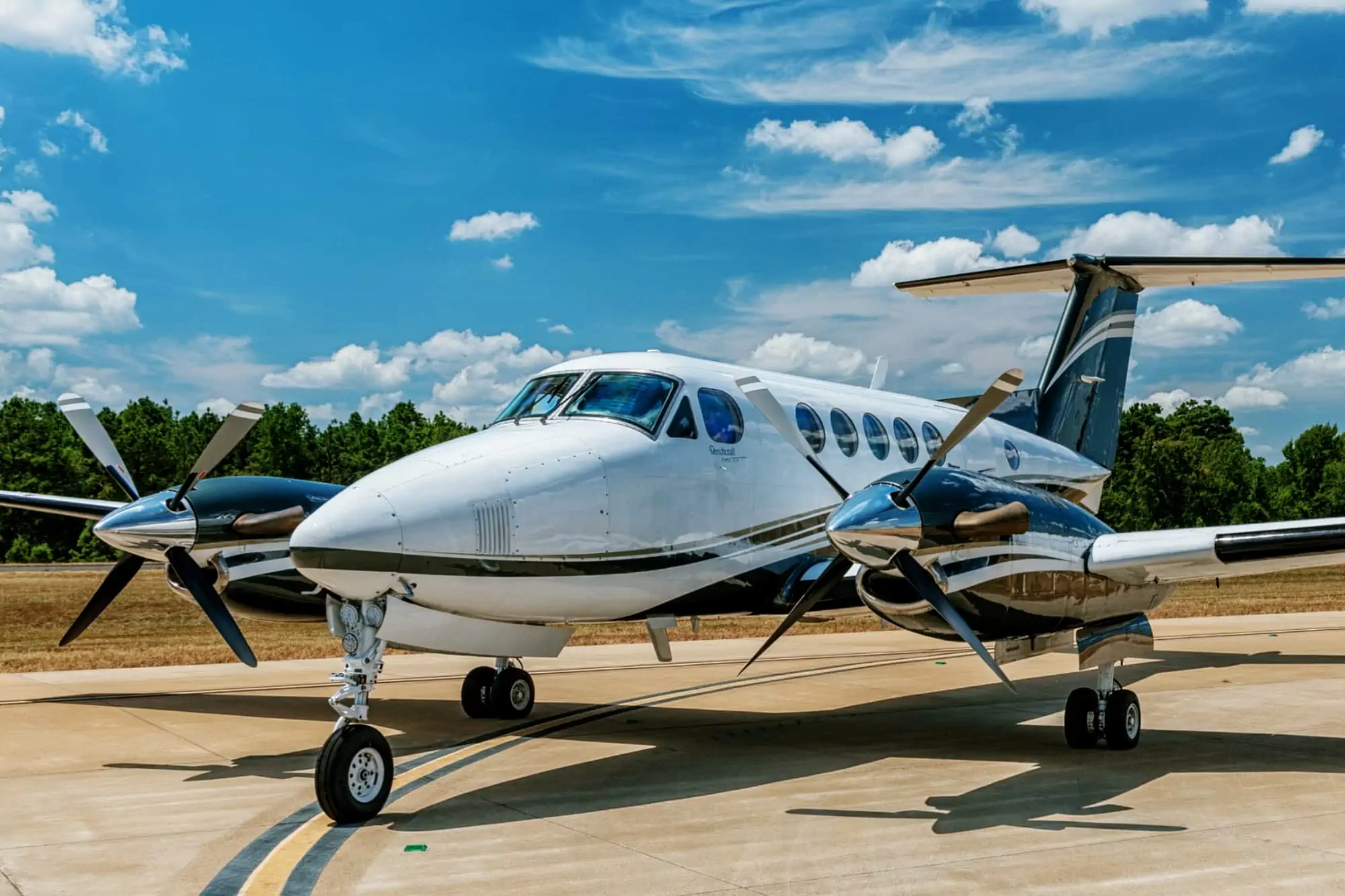
Few aircraft families have established the reputation or longevity of the Beechcraft King Air. Since its introduction in the 1960s, the King Air has become one of the most recognizable aircraft in business aviation, serving everyone from private owners and corporate flight departments to government agencies and air ambulance operators. Its success is particularly notable because the King Air family has continued evolving while maintaining many of the characteristics that made the original aircraft successful. For buyers considering a turboprop, understanding that history helps explain why the King Air continues to command attention in the market.
One of the King Air’s greatest strengths is the range of aircraft available within the family. The smaller C90 series offers pressurized, twin-engine transportation with a relatively compact cabin, while the 200 series provides greater cabin space, payload capability, and performance. The larger 300 and 350 series extend those capabilities further, accommodating more passengers and longer missions. Although these aircraft share a common heritage, their operating characteristics and ownership costs differ considerably. Buyers should view the King Air family as a range of aircraft serving different missions rather than a single model with incremental improvements.
The King Air’s cabin has also contributed to its popularity. Compared with many piston aircraft, King Airs offer passengers a more substantial cabin environment, with pressurization, accessible seating arrangements, and space for baggage and equipment. Larger models provide cabin configurations suitable for business transportation, while smaller King Airs offer a practical alternative for owners who need more capability than a piston twin without moving into a larger turboprop or jet. Cabin size and comfort vary significantly across the series, but the general emphasis on passenger utility has been an important part of the aircraft’s appeal.
Operational flexibility is another reason the King Air has become so widely used. The aircraft family serves an unusually broad range of missions, including corporate transportation, medical evacuation, government operations, and personal travel. Its turboprop engines and airframe characteristics allow many King Air models to operate from airports that may be less practical for certain business jets, providing access to communities beyond major commercial airports. Actual runway requirements depend on the specific model, aircraft loading, weather, and airport conditions, but the ability to combine useful performance with access to smaller airports is a substantial advantage for many operators.
The King Air’s extensive fleet also provides an ownership advantage. Decades of production have created a large base of aircraft, along with an established network of maintenance facilities, parts suppliers, and technicians familiar with the series. This infrastructure can make maintenance planning and aircraft support more practical and flexible, particularly for owners operating away from major aviation centers. However, the size of the fleet doesn’t eliminate the challenges associated with maintaining an aging aircraft. Older King Airs may require considerable investment in avionics, cabin systems, pressurization components, and other equipment, while engine maintenance and major inspections can represent substantial ownership expenses.
For prospective buyers, these strengths should be considered alongside the alternatives. Modern single-engine turboprops, including the Pilatus PC-12 and Daher TBM series, may offer advantages in operating costs, speed, or cabin configuration, depending on the mission. Entry-level jets can provide higher cruise speeds and different passenger accommodations, although their acquisition costs and airport requirements may introduce other trade-offs. The King Air’s twin-engine configuration, established support network, and broad operating capabilities make it attractive, but those advantages must justify the associated costs for the individual owner.
The King Air’s reputation has been earned through decades of practical service across a wide range of operating environments. Its continued popularity reflects an aircraft family that has adapted to changing expectations while retaining the flexibility that made it successful. Still, selecting a King Air requires more than recognizing the strength of the name. A C90, a 200, and a 350 represent very different ownership propositions, and the right choice depends on the missions an owner intends to fly, the passengers and equipment they need to accommodate, and the operating budget they’re prepared to maintain. The King Air family offers buyers an unusually broad range of capable aircraft, but understanding the differences between them is essential to making the right purchase.