Aircraft interiors deteriorate gradually. Carpet wears in high-traffic areas while leather begins to show its age; panels get scuffed, plastics discolor, and years of use slowly change the appearance of the cabin. None of this happens at exactly the same rate, which creates a question for owners when one part of the interior clearly reaches the end of its useful life: how much should you do while the aircraft is already out of service?
We recently faced that decision with one of our clients. The carpet in their aircraft was worn enough that replacement was clearly warranted, but installing new carpet would have highlighted the age of the rest of the cabin. The interior had already reached a point where it was deteriorated as a whole, even if every individual component didn’t require immediate replacement.
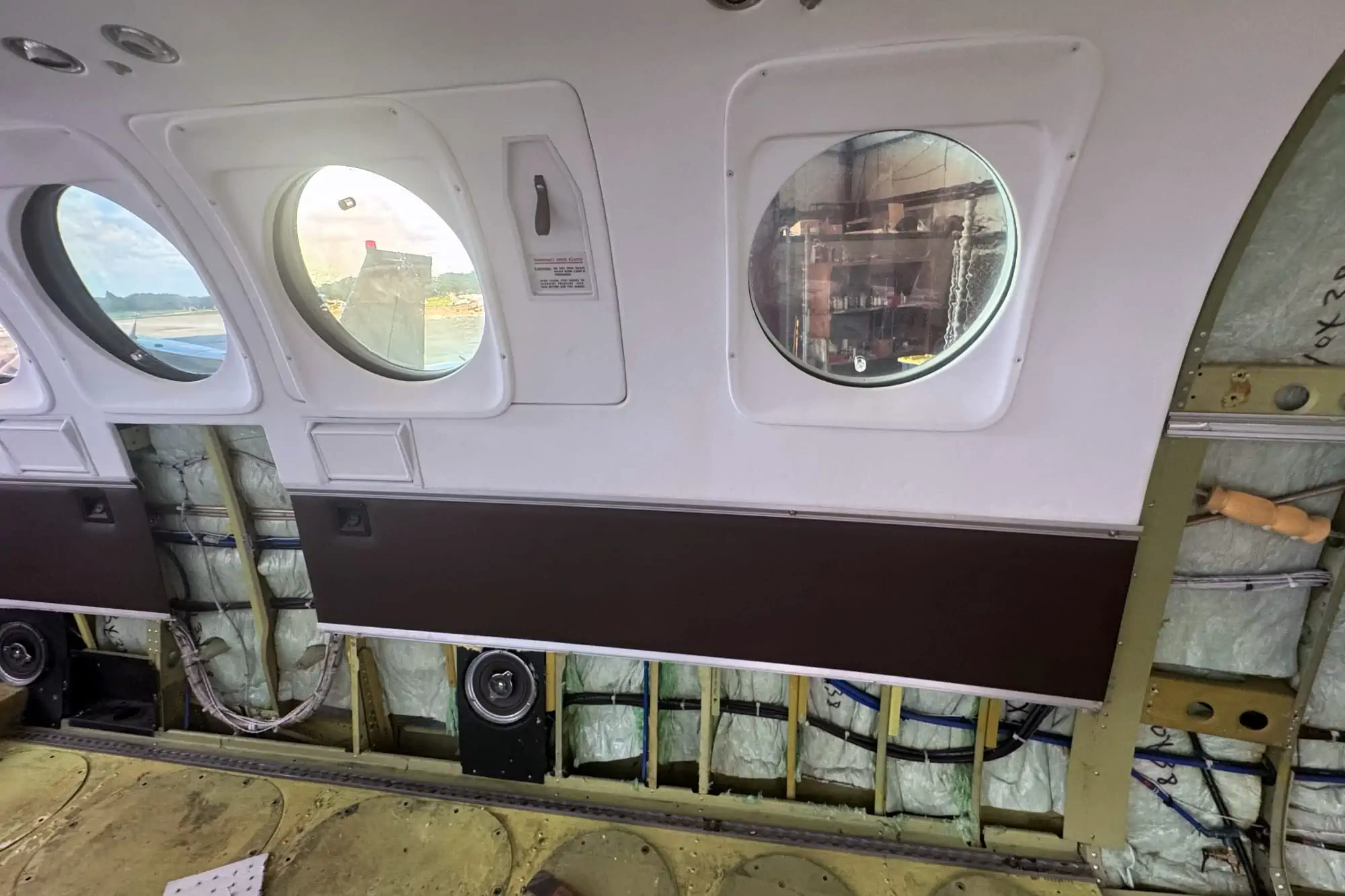
This discussion took place near the time of acquisition, which created an opportunity to approach the project differently. Rather than put the aircraft immediately into regular service and begin addressing the cabin incrementally, approximately a month of downtime was scheduled to update the interior at once. The work extended throughout the cabin and cockpit, including the carpet, headliner, side panels, passenger seating and pilot seats, while also addressing existing issues around the windows.
Completing the work together made it possible to design the cabin as a cohesive interior. Materials and finishes were selected with each other in mind instead of trying to match a new component to something that might itself be replaced a few years later. More importantly for long-term ownership planning, the project gave the interior a common starting point. Instead of installing new carpet alongside other major elements of substantially different ages and condition, most of the cabin could begin its next lifecycle together.
The downtime also created an opportunity to consider how the aircraft would actually be used. USB-A and USB-C charging was installed at every passenger seat location, bringing a practical modern amenity into an older airframe. In the cockpit, charging ports for the pilots’ iPads were positioned in coordination with the existing headset connections so that cables and equipment would make sense in normal operation. These are relatively small modifications within the scope of a complete refurbishment, but they are much easier to incorporate when the aircraft is already apart.
Time out of service is an ownership cost that can be easy to underestimate. Interior projects require scheduling and substantial disassembly before the refurbishment itself begins, followed by reinstallation and return to service. Addressing the cabin incrementally may reduce the size of any individual project, but each visit creates another interruption in the aircraft’s availability. For an aircraft that flies regularly, concentrating appropriate work into a planned period can be considerably easier to accommodate.
Interior refurbishment should ultimately fit into the same long-term planning as maintenance and other aircraft improvements. When one deteriorated component creates the need for meaningful downtime, it is worth considering what else is approaching the same point and what improvements make sense while the aircraft is already unavailable. In this case, worn carpet provided the opportunity to reset the cabin at the beginning of a new ownership cycle. The aircraft entered regular service with a cohesive interior, practical improvements already incorporated, and the disruption of a major cabin refurbishment behind it.